Yep, we may get a tiny thank-you (read: commission) when you buy through
links on Gadgetspotr — not enough for a yacht, but enough to keep the lights (and
servers) on.
Learn more
Ooops...!
You've got an alert.
7
Alternatives
0
Likes
The 7 Alternatives to Ray-Ban Meta Skyler
:
Smart Glass Alternatives Compared Clearly — 2026
Compare Smart Glass alternatives using data on battery, weight, recording limits, and display capabilities.
Explore Your Options
Alternative products worth considering.
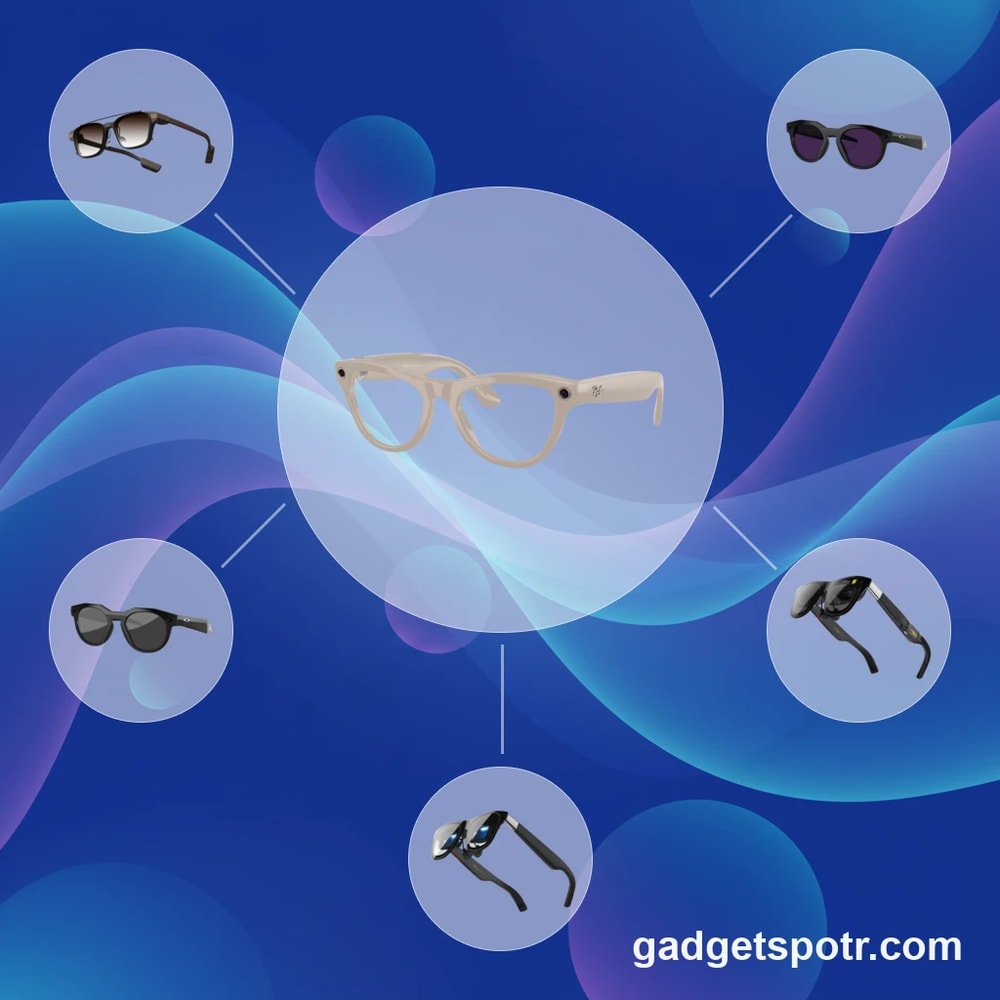
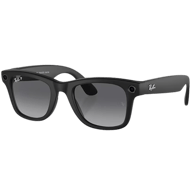
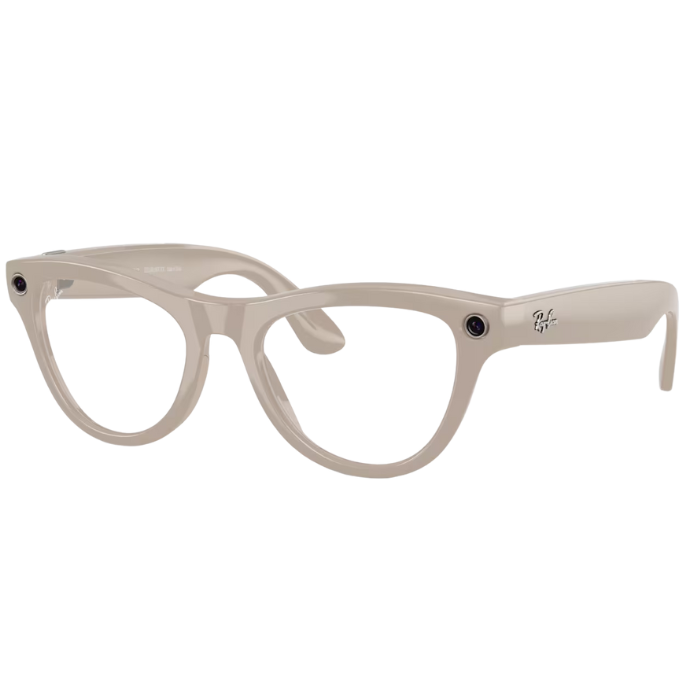
Readers looking for alternatives to Ray Ban meta Skyler are usually not rejecting the idea of smart glasses, they are narrowing in on the details that shape daily use. Ray-Ban Meta Skyler sets a clear reference point with a 12 MP camera, a five-mic system, custom speakers, and transition lenses that shift from clear to dark for day and night wear. That combination works well for people who want an easy mix of photo capture, video, calls, and music in a fashionable frame, but the broader smart glass market shows that not every buyer wants the same balance of style, display tech, privacy, battery life, or AI support.
That is why alternatives are worth comparing through measurable differences rather than brand recognition alone. In the staged sources, some models focus on lighter frames, such as options around 35 g to 49 g, while others push more advanced display experiences with dual-eye visuals, higher brightness claims, or heads-up information overlays. There are also meaningful gaps in recording limits, with some glasses discussed as extending capture time beyond the shorter clips associated with lifestyle-first models, and clear differences in battery expectations, including estimates up to 10 hours for audio-first designs. For many shoppers, those numbers matter more than marketing language because they affect comfort, downtime, and whether a pair fits commuting, travel, gaming, or content creation.
The comparison also gets more practical once you look at trade-offs. Some alternatives skip cameras entirely to reduce privacy concerns, some support wider prescription ranges, and others lean into translation, teleprompting, or handheld gaming instead of social capture. Pricing spreads across entry-level and premium tiers as well, so the smartest choice is rarely the one with the longest feature list, it is the one whose strengths match how you actually plan to use it.
This guide approaches alternatives to Ray Ban meta Skyler from that lens. Instead of treating every option as a direct replacement, it looks at how different smart glass models solve different problems, and why those differences are easier to judge when the comparison stays grounded in verified specs, intended use cases, and real usability signals.
Alternative Options
Other products worth your attention.
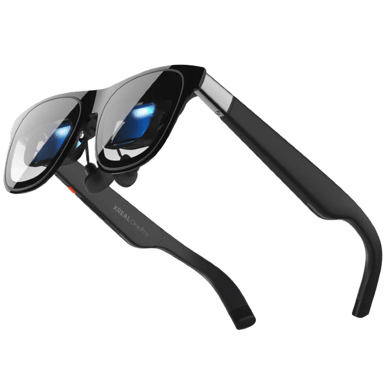
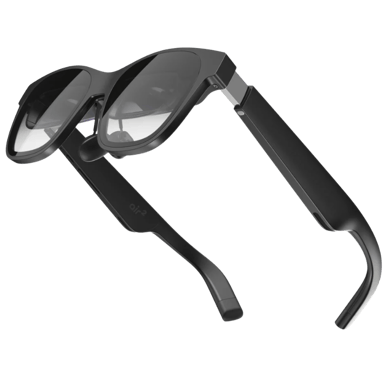
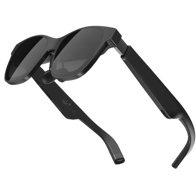
The XReal One Pro serves as a relevant alternative to the Ray-Ban Meta Skyler, offering similar core functionalities as wearable smart glasses designed for entertainment and work. It supports multiple platforms and provides advanced display and audio technologies that align well with the capabilities of the Ray-Ban Meta Skyler.
Both are smart glasses intended for entertainment and professional use cases, supporting Android and iOS compatibility.
The XReal One Pro features a high-quality display type with Micro-OLED technology, comparable to the Waveguide display in the Ray-Ban Meta Skyler.
Both glasses provide integrated audio solutions, with XReal One Pro equipped with Bose quad speakers and beamforming microphone, enhancing immersive experiences.
They share similar control schemes including touch and voice control, and have USB-C charging ports for modern connectivity.
Overall, the XReal One Pro can practically replace the Ray-Ban Meta Skyler for users seeking AR/AI glasses in mixed use environments with a focus on entertainment and productivity.
Nerdy Bits & Must-Knows
Specs worth knowing…
XReal One Pro
Product Type
What type of smart glasses are these?
89
XReal One Pro
0
Votes
AR Glasses
81
Smart Glasses in this range
Audio Glasses
Defines the main functional category of the smart glasses.
When it comes to Product Type,
XReal One Pro ◉ is
better than
Smart Glass in this range ◉
, delivering
higher
8 score
measurement.
Don’t keep it to yourself — be the first to react and review the
Product Type on XReal One Pro
◉ and help others decide!
XReal One Pro
Compatibility
What devices are they compatible with?
83
XReal One Pro
1
Votes
android, iOS, Windows, Mac, Gaming Consoles
70
Smart Glasses in this range
android, iOS
XReal One Pro
Broad compatibility allows seamless use with various devices, from smartphones and PCs to gaming consoles like PlayStation, if using an adapter.
Operating systems and devices supported.
When it comes to Compatibility,
XReal One Pro ◉ is
better than
Smart Glass in this range ◉
, delivering
higher
13 score
measurement.
Don’t keep it to yourself — be the first to react and review the
Compatibility on XReal One Pro
◉ and help others decide!
XReal One Pro
Display Type
What display type do they use?
89
XReal One Pro
0
Votes
Micro-OLED
78
Smart Glasses in this range
Micro-OLED
XReal One Pro
Micro-OLED technology offers sharp visuals and vivid colors in a compact form, perfect for AR experiences.
The underlying display technology used.
When it comes to Display Type,
XReal One Pro ◉ is
better than
Smart Glass in this range ◉
, delivering
higher
11 score
measurement.
Don’t keep it to yourself — be the first to react and review the
Display Type on XReal One Pro
◉ and help others decide!
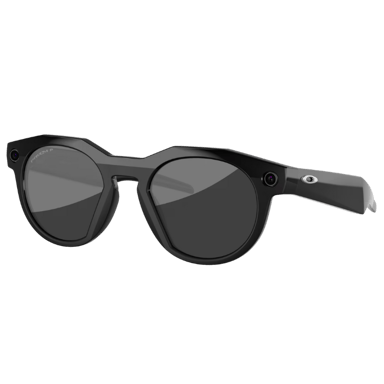
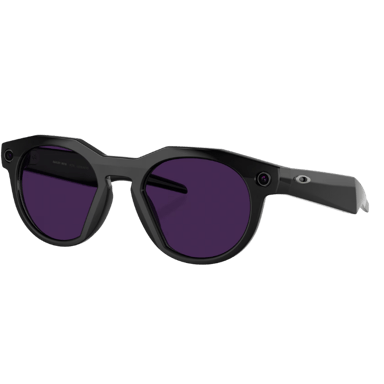
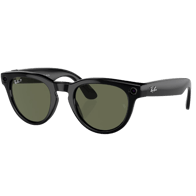
The Oakley Meta HSTN is a relevant alternative to the Ray-Ban Meta Skyler as both are AI glasses designed with similar core functionalities and target use cases, though they differ in style and some specific features.
Both are AI glasses released in 2025 with wireless connectivity and compatible with Android and iOS platforms.
They feature open-ear speakers, MEMS microphones (five in number), and incorporate Meta AI as their smart assistant.
Both provide USB-C charging, use Li-Polymer batteries, and share an IPX4 water resistance rating.
The Ray-Ban has a cat eye design suitable for mixed environments, while Oakley offers a sportier style focused on outdoor use, making them stylistically distinct but functionally overlapping.
Overall, the Oakley Meta HSTN can serve as a strong alternative depending on user preference for design and lens types.
Nerdy Bits & Must-Knows
Specs worth knowing…
Oakley Meta HSTN
Product Type
What type of smart glasses are these?
94
Oakley Meta HSTN
0
Votes
AI Glasses
81
Smart Glasses in this range
Audio Glasses
Defines the main functional category of the smart glasses.
When it comes to Product Type,
Oakley Meta HSTN ◉ is
better than
Smart Glass in this range ◉
, delivering
higher
13 score
measurement.
Don’t keep it to yourself — be the first to react and review the
Product Type on Oakley Meta HSTN
◉ and help others decide!
Oakley Meta HSTN
Release Year
What year were they released?
89
Oakley Meta HSTN
0
Votes
2025
74
Smart Glasses in this range
2024
The year the product was released to the market.
When it comes to Release Year,
Oakley Meta HSTN ◉ is
better than
Smart Glass in this range ◉
, delivering
higher
15 score
measurement.
Don’t keep it to yourself — be the first to react and review the
Release Year on Oakley Meta HSTN
◉ and help others decide!
Oakley Meta HSTN
Bluetooth Version
What Bluetooth version do they use?
99
Oakley Meta HSTN
0
Votes
5.3
78
Smart Glasses in this range
5.2
Version of Bluetooth supported.
When it comes to Bluetooth Version,
Oakley Meta HSTN ◉ is
better than
Smart Glass in this range ◉
, delivering
higher
21 score
measurement.
Don’t keep it to yourself — be the first to react and review the
Bluetooth Version on Oakley Meta HSTN
◉ and help others decide!
The XReal One shares core similarities with the Ray-Ban Meta Skyler in terms of being wearable smart glasses designed for mixed-use environments including entertainment and work, making it a relevant alternative in many scenarios.
Both products are smart glasses compatible with android and iOS platforms.
They use advanced waveguide display technologies, although the XReal One utilizes Micro-OLED with Sony displays, while the Meta Skyler employs waveguide displays with higher resolution.
The design focus targets entertainment, work, and travel use cases, supporting immersive media consumption and productivity functions.
Both devices support USB-C charging and feature passive cooling thermal management.
However, differences in display resolution, presence of a camera, and audio technologies may affect specific user needs.
Nerdy Bits & Must-Knows
Specs worth knowing…
XReal One
Product Type
What type of smart glasses are these?
88
XReal One
0
Votes
AR Glasses
84
Smart Glasses in this range
Audio Glasses
Defines the main functional category of the smart glasses.
When it comes to Product Type,
XReal One ◉ is
better than
Smart Glass in this range ◉
, delivering
higher
4 score
measurement.
Don’t keep it to yourself — be the first to react and review the
Product Type on XReal One
◉ and help others decide!
XReal One
Compatibility
What devices are they compatible with?
82
XReal One
0
Votes
android, iOS, Windows, Gaming Consoles
73
Smart Glasses in this range
android, iOS
XReal One
Compatible with a wide range of devices, including iPhones 16 and above, Androids, PCs, and consoles like the Steam Deck and Nintendo Switch.
Operating systems and devices supported.
When it comes to Compatibility,
XReal One ◉ is
better than
Smart Glass in this range ◉
, delivering
higher
9 score
measurement.
Don’t keep it to yourself — be the first to react and review the
Compatibility on XReal One
◉ and help others decide!
XReal One
Display Type
What display type do they use?
87
XReal One
0
Votes
Micro-OLED
84
Smart Glasses in this range
Micro-OLED
XReal One
Micro-OLED technology delivers crisp, vibrant visuals with high contrast and deep blacks.
The underlying display technology used.
When it comes to Display Type,
XReal One ◉ is
better than
Smart Glass in this range ◉
, delivering
higher
3 score
measurement.
Don’t keep it to yourself — be the first to react and review the
Display Type on XReal One
◉ and help others decide!
The Oakley Meta HSTN Transitions offers a highly relevant alternative to the Ray-Ban Meta Skyler as both are AI glasses designed for versatile use including entertainment, work, travel, and fitness. They share many core functional aspects that make the Oakley a practical substitute.
Both are AI glasses compatible with Android and iOS platforms, supporting the same Meta AI assistant system.
Each features transition lenses suitable for different lighting environments, enhancing usability outdoors and indoors.
They share the same primary target use cases, covering a broad range from work to fitness and entertainment.
Both models use plastic frames with a gloss finish and include open-ear speakers and multiple microphones, facilitating similar audio experiences.
Overall, Oakley Meta HSTN Transitions can realistically replace Ray-Ban Meta Skyler for users seeking AI glasses with comparable functionality and features.
Nerdy Bits & Must-Knows
Specs worth knowing…
Oakley Meta HSTN Transitions
Product Type
What type of smart glasses are these?
94
Oakley Meta HSTN Transitions
0
Votes
AI Glasses
82
Smart Glasses in this range
Audio Glasses
Oakley Meta HSTN Transitions
The Oakley Meta HSTN falls under the category of AI-powered smart glasses, designed for enhanced user interaction through Meta AI.
Defines the main functional category of the smart glasses.
When it comes to Product Type,
Oakley Meta HSTN Transitions ◉ is
better than
Smart Glass in this range ◉
, delivering
higher
12 score
measurement.
Don’t keep it to yourself — be the first to react and review the
Product Type on Oakley Meta HSTN Transitions
◉ and help others decide!
Oakley Meta HSTN Transitions
Lens Type
What type of lenses do they have?
49
Oakley Meta HSTN Transitions
0
Votes
Transition
60
Smart Glasses in this range
Polarized
Oakley Meta HSTN Transitions
The lenses automatically adjust to light conditions, turning darker in the sun to protect eyes, ensuring both comfort and eye safety.
Type of lenses provided by default.
When it comes to Lens Type,
Oakley Meta HSTN Transitions ◉ is
worse than
Smart Glass in this range ◉
, delivering
equal
11 score
measurement.
Don’t keep it to yourself — be the first to react and review the
Lens Type on Oakley Meta HSTN Transitions
◉ and help others decide!
69
Smart Glasses in this range
Entertainment, Work, Travel
Oakley Meta HSTN Transitions
Ideal for various activities, from entertainment like music and media playback to fitness tracking and work-related tasks, these glasses cater to active and professional lifestyles.
The intended scenarios where the product performs best.
When it comes to Target Use Case,
Oakley Meta HSTN Transitions ◉ is
worse than
Smart Glass in this range ◉
, delivering
equal
2 score
measurement.
Don’t keep it to yourself — be the first to react and review the
Target Use Case on Oakley Meta HSTN Transitions
◉ and help others decide!
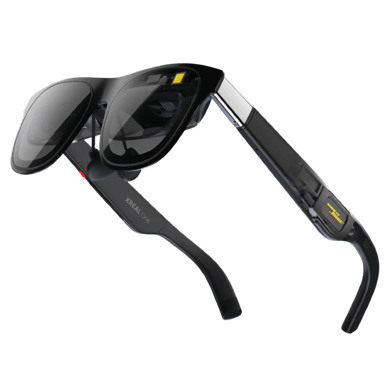
The XReal Air 2 presents itself as a relevant alternative to the Ray-Ban Meta Skyler by offering similar core functionalities as wearable smart glasses focused on entertainment and work use. Despite some differences in product type definition and display technology, both cater to connected experiences compatible with popular mobile platforms.
Both devices are smart glasses designed for multimedia and productivity use, supporting Android and iOS compatibility.
They feature open-ear speakers and MEMS microphones, enabling hands-free communication and ambient sound awareness.
The XReal Air 2 uses Micro-OLED displays with high contrast ratio and multiple preset modes, comparable in purpose to the Meta Skyler's waveguide display optimized for mixed-use scenarios.
Both models offer wireless or wired connectivity with companion app support tailored to mobile devices and provide touch-based controls located on the left temple.
Overall, for users seeking alternative AR/AI glasses principally for entertainment, work, and travel, the XReal Air 2 can reasonably substitute the Meta Skyler.
Nerdy Bits & Must-Knows
Specs worth knowing…
XReal Air 2
Product Type
What type of smart glasses are these?
86
XReal Air 2
0
Votes
AR Glasses
80
Smart Glasses in this range
Audio Glasses
Defines the main functional category of the smart glasses.
When it comes to Product Type,
XReal Air 2 ◉ is
better than
Smart Glass in this range ◉
, delivering
higher
6 score
measurement.
Don’t keep it to yourself — be the first to react and review the
Product Type on XReal Air 2
◉ and help others decide!
The Ray-Ban Stories has been discontinued️.
Our community last shared an update on
December 16, 2025.
Why Consider This
What makes it stand out.
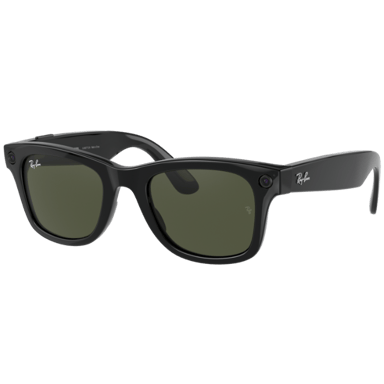
The Ray-Ban Stories is a relevant alternative to the Ray-Ban Meta Skyler for users seeking smart glasses primarily focused on audio features and basic camera capabilities. While it differs in product generation and display technology, it offers similar core functionalities suitable for entertainment, work, and travel.
Both products support Android and iOS platforms, ensuring broad device compatibility.
They share the same type of wireless connectivity and use USB-C for charging.
Each features open-ear speakers and MEMS microphones, enabling hands-free communication and audio experiences.
Both come with transition lenses and fit medium frame sizes, catering to similar style and usage comfort.
However, Ray-Ban Stories lacks an integrated augmented reality display and an AI assistant, which limits its capability to fully replace the Meta Skyler for advanced AR and AI interactive use cases.
Nerdy Bits & Must-Knows
Specs worth knowing…
Ray-Ban Stories
Product Type
What type of smart glasses are these?
31
Ray-Ban Stories
0
Votes
Audio Glasses
54
Smart Glasses in this range
Audio Glasses
Ray-Ban Stories
Combines premium Ray-Ban eyewear with discreet open-ear speakers and dual microphones for hands-free music, calls, and photos—no earbuds needed.
Defines the main functional category of the smart glasses.
When it comes to Product Type,
Ray-Ban Stories ◉ is
worse than
Smart Glass in this range ◉
, delivering
equal
23 score
measurement.
Don’t keep it to yourself — be the first to react and review the
Product Type on Ray-Ban Stories
◉ and help others decide!
Ray-Ban Stories
Compatibility
What devices are they compatible with?
81
Ray-Ban Stories
0
Votes
android, iOS, Windows
66
Smart Glasses in this range
android, iOS
Operating systems and devices supported.
When it comes to Compatibility,
Ray-Ban Stories ◉ is
better than
Smart Glass in this range ◉
, delivering
higher
15 score
measurement.
Don’t keep it to yourself — be the first to react and review the
Compatibility on Ray-Ban Stories
◉ and help others decide!
Ray-Ban Stories
Speaker Type
What type of speakers are built in?
61
Ray-Ban Stories
0
Votes
Open-Ear
57
Smart Glasses in this range
Open-Ear
Defines the type of speakers used in the glasses.
When it comes to Speaker Type,
Ray-Ban Stories ◉ is
better than
Smart Glass in this range ◉
, delivering
higher
4 score
measurement.
Don’t keep it to yourself — be the first to react and review the
Speaker Type on Ray-Ban Stories
◉ and help others decide!
The Even G1 offers a technologically competent alternative to the Ray-Ban Meta Skyler in the realm of smart glasses, particularly for users focused on work, travel, and fitness applications. However, differences in display technology and multimedia features suggest that the Even G1 may serve better as a complementary or partial substitute rather than a full replacement.
Both products support wireless connectivity and are compatible with Android and iOS platforms, ensuring seamless integration with mobile devices.
Each glasses model includes advanced display technologies optimized for augmented reality, though Ray-Ban Meta Skyler uses waveguide displays with a much higher resolution, while Even G1 employs Micro-LED with a lower resolution.
The Ray-Ban Meta Skyler provides open-ear audio with multiple microphones and AI assistant integration, while the Even G1 lacks embedded speakers and features fewer microphones, relying on a different AI assistant.
Both glasses employ passive cooling systems and use USB-C for charging with similar battery technologies, suggesting comparable practical use regarding power management.
Nerdy Bits & Must-Knows
Specs worth knowing…
Even G1
Product Type
What type of smart glasses are these?
87
Even G1
0
Votes
AR Glasses
83
Smart Glasses in this range
Audio Glasses
Even G1
Augmented Reality (AR) glasses designed for seamless interaction with your digital world. Perfect for a tech-savvy lifestyle.
Defines the main functional category of the smart glasses.
When it comes to Product Type,
Even G1 ◉ is
better than
Smart Glass in this range ◉
, delivering
higher
4 score
measurement.
Don’t keep it to yourself — be the first to react and review the
Product Type on Even G1
◉ and help others decide!
Even G1
Model Number
What is the model number?
66
Even G1
0
Votes
G1
72
Smart Glasses in this range
G05
Manufacturer’s unique model code for tracking.
When it comes to Model Number,
Even G1 ◉ is
worse than
Smart Glass in this range ◉
, delivering
equal
6 score
measurement.
Don’t keep it to yourself — be the first to react and review the
Model Number on Even G1
◉ and help others decide!
Even G1
Compatibility
What devices are they compatible with?
87
Even G1
0
Votes
android, iOS
74
Smart Glasses in this range
android, iOS
Operating systems and devices supported.
When it comes to Compatibility,
Even G1 ◉ is
better than
Smart Glass in this range ◉
, delivering
higher
13 score
measurement.
Don’t keep it to yourself — be the first to react and review the
Compatibility on Even G1
◉ and help others decide!
Worth a Second Look
Didn't make the cut this time, but still solid options.
Stuff You Were Too Shy to Ask
But we answered it anyway.
What battery life should smart glasses realistically deliver daily?
Battery expectations vary widely depending on features like cameras, displays, and AI processing. Audio-first models can reach around 10 hours of use, while camera-heavy or recording-focused glasses may drain faster, especially during video capture sessions. Some tests show short recording sessions consuming a large portion of battery, which affects daily usability. Charging speed also matters, with some devices reaching full charge in under an hour. When comparing options, look beyond total hours and consider how quickly the battery drains during your most common tasks, such as recording, streaming, or voice interaction.
How important is weight when choosing smart glasses for long wear?
Weight directly affects comfort, especially during extended use. Smart glasses can range from about 35 g to over 80 g, with lighter models generally feeling closer to traditional eyewear. Heavier frames often include advanced components like dual displays or tracking systems, which can shift pressure to the nose and temples. Balanced weight distribution is just as important as total weight, since poor ergonomics can cause fatigue even in lighter designs. For daily wear, especially commuting or office use, prioritizing a lower weight and stable fit can improve long-term comfort significantly.
What recording limits matter for capturing videos on smart glasses?
Recording limits can define how practical smart glasses are for content creation. Some models cap video clips at around 5 minutes in 1080p, while others extend recording time closer to 9 minutes or more. These limits affect whether you can capture continuous footage without interruption. Resolution also varies, typically between 1080p and higher tiers, but clip duration often has a bigger impact on usability. If your use involves frequent recording, consider both the maximum clip length and how quickly the device recovers between sessions, as overheating or battery drain can shorten real-world recording time.
How do display types affect usability and visibility in smart glasses?
Display technology influences how information is presented and how comfortable it is to view. Some glasses use single-eye projection, while others offer dual-eye displays with brightness levels reaching thousands of nits. Higher brightness can improve visibility outdoors, but may increase power consumption. Optical systems like waveguide or micro-OLED affect clarity and immersion, with dual displays generally offering a more balanced viewing experience. However, simpler or display-free designs can feel less intrusive. Choosing the right display depends on whether you prioritize subtle notifications or continuous visual interaction.
Are smart glasses safe and private for everyday use?
Safety and privacy depend on design choices such as cameras, microphones, and light leakage. Some models minimize concerns by removing cameras entirely, while others include visible indicators or low leakage displays, sometimes measured as low as 2% light emission. Water resistance ratings like IP67 or IPX4 can also signal durability in daily environments. Microphone arrays and audio systems should be evaluated for clarity without excessive sound leakage. For many users, privacy-friendly designs without recording features may feel more appropriate for public or workplace use.
How do AI features differ in accuracy and language support?
AI capabilities vary in both scope and reliability. Some systems support only a few languages, while others extend to dozens of languages, improving usefulness for travel or multilingual communication. Translation accuracy may not be perfect, but can still convey essential meaning. AI assistants also differ in flexibility, with some allowing broader queries and others focusing on predefined functions. When comparing, consider how well the system handles follow-up interactions, response speed, and real-world scenarios rather than just the number of supported features.
What factors affect comfort and fit for different face shapes?
Comfort depends on more than size, it includes nose pad design, frame width, and temple pressure. Some models sit directly on the nose, while others use adjustable pads to distribute weight more evenly. Frames that support a wider prescription range, sometimes up to ±16 diopters, can accommodate more users. Adjustable elements like IPD or diopter settings also help fine-tune the fit. A good fit reduces pressure points and improves stability during movement, making the glasses more practical for extended daily use across different environments.
Which features matter most when comparing smart glasses performance overall?
Performance should be evaluated across several measurable areas rather than a single feature. Key factors include battery endurance, recording limits, weight, and display brightness, along with usability elements like charging speed and connectivity. For example, Ray-Ban Meta Skyler focuses on balanced lifestyle features, while alternatives may prioritize extended recording, lighter frames, or advanced displays. The best approach is to match specifications with your primary use case, whether that involves media consumption, productivity, or communication, instead of assuming one device excels in all areas.
Big Brain Stuff, Summed Up
Because who reads everything, right?
Choosing an Alternative to Ray-Ban Meta Skyler: alternatives to Ray-Ban Meta Skyler ultimately come down to how well the specifications align with your daily needs. While Ray-Ban Meta Skyler offers a balanced mix of camera, audio, and wearable design, the broader Smart Glass category shows measurable variation in areas like battery life, with some models reaching around 10 hours, and weight, ranging from roughly 35 g to over 80 g. Display capabilities also differ significantly, from no display at all to dual-eye systems with brightness levels in the thousands of nits, which can influence visibility and immersion depending on your environment.
These differences highlight why comparing recording limits, charging times, and fit-related features can be more useful than focusing on brand positioning alone. For example, extended recording durations beyond 5 minutes, faster recharge cycles under an hour, or wider prescription compatibility can make a noticeable difference in real-world use. Features like translation support across dozens of languages or improved durability ratings, such as IP67, may also indicate stronger suitability for travel, work, or outdoor conditions. Each of these measurable factors helps clarify whether a device supports your primary use case effectively.
Rather than assuming one option outperforms all others, it is more practical to weigh performance consistency, comfort, and usability trade-offs side by side. Looking closely at how specifications translate into everyday experience, including battery endurance, display clarity, and interaction methods, can lead to a more informed decision. The best choice is the one that aligns with your specific priorities, supported by verifiable data rather than assumptions.